
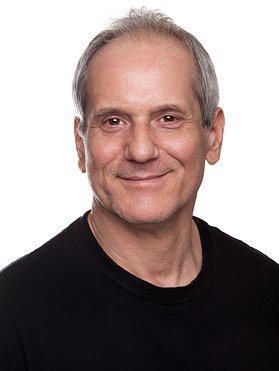
David is a researcher and designer in the field of gamification, game worlds and mixed reality in professional education and training. He holds a doctorate in the field of curriculum design in higher education and masters degrees in cognitive neuroscience and medical education. Over his career he has served as academic dean, program coordinator and faculty in the field of medical education across Canada before focusing his work on the emerging field of digital game worlds. His current clients include the United Nations World Food Programme (Nobel laureates 2020), the World Health Organization, the Insurance Institute of Canada and Baycrest Health Sciences. He is a senior scholar at the Ted Rogers School of Management in the Inclusive Media and Design Center specializing in technology for aging. His research interests include complexity theory in education, the design of learning to increase cognitive function in older adults and the use of gamification in the treatment of substance abuse disorders and addiction medicine.
Larry ‘s reactions:
Professor David Chandross is a Master of Digital Media from the Toronto Metropolitan University. His presentation focussed on artificial intelligence and virtual reality. He is extremely knowledgeable about these topics and presented in a very engaging and humorous manner. The origins of A.I. started in the 1950’s by professor Marvin Minsky of the Massachusetts Institute of Technology. A.I. is with us and we have to cope with it. This technology is machine learning and appears through neuro networks. We as humans are organized around emotions. Emotions are physical reactions to stimuli. A.I. lacks emotions. The Journal of Artificial Intelligence started the rapid development of A.I. This technology can be very useful e.g. In the health and sciences fields but it can also be a destructive tool. In Canada, there is very limited legislation in the area of artificial intelligence. Virtual reality will co-exist with A.I. The concept of V.R. is from the 1950’s when Ultimate Video Reality displays were invented. Dr. Chandross just scratched the surface of these topics and gave us much food for thought regarding this rapidly developing technology.