
June Speaker Report – Dr. Daniel Napierski, OD
“The Eye Guy Who Saw Everything”
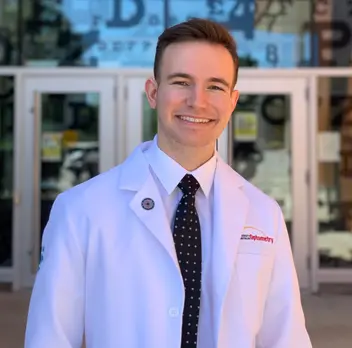
Our June speaker, Dr. Daniel Napierski, left members saying things like “Wow,” “Brilliant,” and “I had no idea my eyelids were working that hard.” In fact, so many people kept asking questions through the break that we briefly considered offering him overtime. The need for coffee overruled that however.
Freshly qualified, highly specialised, and armed with more knowledge about eyeballs than most of us have about our own grandchildren’s birthdays, Dr. Napierski delivered one of the most engaging talks we’ve had. His topic: Vision Care for Seniors, or as he put it, “Everything your eyes wish they could tell you.”
He began with a striking statistic: 25% of people over 80 have some form of visual impairment — and 75% of those conditions are preventable. In other words, three‑quarters of our eyesight problems are not inevitable… which is more than we can say for grey hair and wrinkles.
Dr. Napierski walked us through the eye piece by piece, proving that eyes are far more than just vision. Eyelids, lashes, corneas, lenses, nerves, jelly, and retina — each part has a job, and each part can misbehave. He explained blepharitis (which, surprisingly, involves mites producing “poop”), dry eye disease (which can cause more tears, not fewer), cataracts (which everyone will get eventually), and retinal emergencies (which everyone hopes they won’t).
His explanations were clear, practical, and sprinkled with memorable analogies — including the cornea as the “windshield” of the eye. Members nodded along, partly in understanding and partly in relief that their windshields don’t need wiper fluid.
The takeaway was simple:
- Any red, painful eye deserves an optometrist’s attention.
- Sudden floaters or flashes are not to be ignored.
- Good health habits protect your vision.
- And most importantly, your eyes are working harder than you think — be kind to them.
Members left the meeting seeing things in a whole new light… literally and figuratively. And with a deeper appreciation of how remarkable the human eye is, and how much we can do to preserve our sight well into later life.
And if Dr. Napierski ever returns, we’ll be ready with even more questions — preferably before the break this time.
FYI: Here is a slightly longer summary of his talk:
The Eye: More Than Just Vision
Dr. Napierski reminded us that the eyes are complex organs with many structures working together. Eyelids and lashes protect the eye, but problems such as blepharitis—a bacterial or mite‑related inflammation—can cause itching, redness, and irritation. Treatment may include eyelid wipes, warm compresses, antiseptic sprays, or in‑office cleaning.
He also explained styes, which are infections of the eyelid glands. These present with swelling and redness and may be internal or external.
Muscles and Nerves
Weak eye muscles, often related to age or fatigue, can lead to double vision. Persistent double vision should always be assessed by an optometrist, as nerve palsies have several possible causes.
The Conjunctiva
The white part of the eye is covered by the conjunctiva. Conjunctivitis—inflammation of this tissue—can be caused by bacteria, viruses, or allergies. Each requires different treatment.
A more urgent condition is uveitis, inflammation of the iris, which needs prompt attention.
The Cornea
The cornea is the clear “windshield” of the eye and contains most of the eye’s sensation. Dry eye disease becomes more common with age and certain medications. Symptoms may paradoxically include tearing. Many treatments are available.
More serious is a corneal ulcer, which may result from shingles, herpes simplex, or bacterial infection.
Any red, painful eye should be seen by an optometrist.
Lens and Cataracts
The natural lens can become cloudy over time, forming a cataract—a universal part of ageing and the leading cause of reversible vision loss. Diabetes and heart disease can accelerate cataract development. Surgery is the only treatment, takes about ten minutes, and is very safe.
Vitreous and Retina
The vitreous is the jelly‑like centre of the eye. As it breaks down, people may notice floaters. Sudden changes can indicate retinal tears or detachment, which are emergencies.
The retina itself is the sensory tissue at the back of the eye. Retinopathy, often linked to diabetes, involves leaking blood vessels and reduced oxygen delivery. Good blood sugar control is essential.
Macular degeneration becomes more common after age 70.
- Dry macular degeneration (80% of cases) progresses slowly; vitamins and emerging treatments may help.
- Wet macular degeneration involves bleeding and scarring and progresses rapidly, requiring injections.
Other retinal emergencies include artery occlusions, sometimes described as a “stroke in the eye.”
Optic Nerve and Beyond
Glaucoma damages the optic nerve and gradually reduces vision. Giant cell arteritis, a serious inflammatory condition, can also affect the optic nerve. The brain itself can produce ocular migraines, causing temporary visual disturbances.
Eye Lubricants
For dry eye relief, Dr. Napierski recommended preservative‑free lubricants, often supplied in special bottles. Brands mentioned included Systane, HydraSense, Refresh, and Soothe, with higher‑quality options available through optometry offices.
Thank You to Larry O’Donnell and the speakers committee for arranging this.